

How to Ship a Car Overseas: Cost, Methods, and Timeline (2026 Guide)
A plain-English 2026 guide to international car shipping: RoRo vs. container, real cost ranges, how long it takes by destination, the documents U.S. Customs requires, and how to choose a licensed, insured shipping company. [...]Read More...
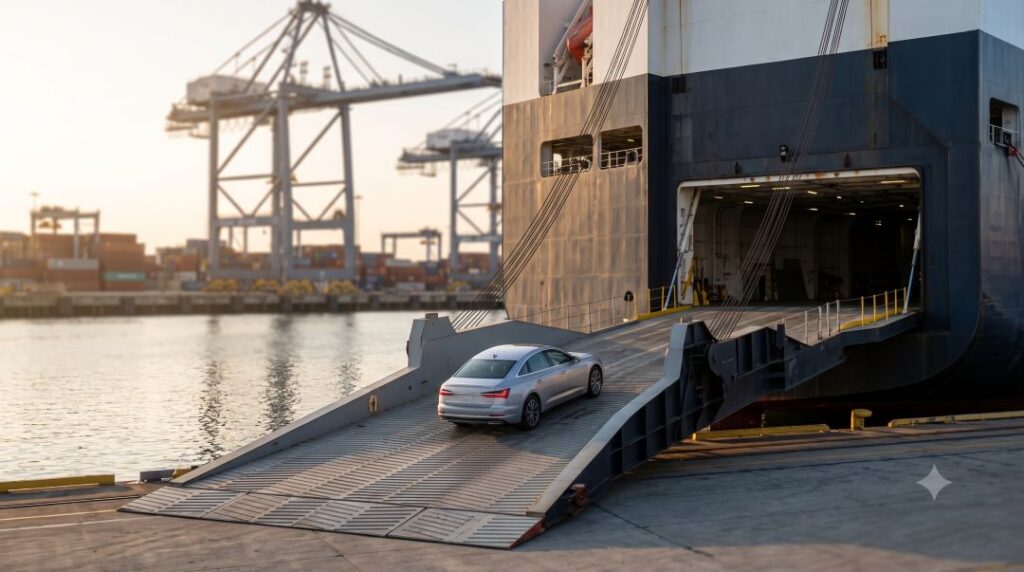
Shipping a car overseas comes down to three decisions: the method, the budget, and the calendar. Most Americans moving abroad use overseas vehicle shipping by ocean freight, either RoRo (roll-on/roll-off) or container shipping. As a rough guide, international car shipping runs about $1,500 to $3,500 for RoRo to Europe and $2,500 to $5,000 or more for a container, and the ocean transit takes anywhere from 2 to 8 weeks depending on the destination country.
This guide walks through how the process actually works, what drives the price, how long each leg takes, and the paperwork U.S. Customs expects before your vehicle leaves the departure port. It is written for anyone doing this for the first time, whether you are relocating for work, retiring abroad, or handling a military move on PCS orders with a privately owned vehicle.
How to ship a car overseas
You ship a car overseas by booking an international auto transport service, choosing an ocean freight method, preparing the vehicle and its documents, clearing U.S. export requirements, and then collecting the car after customs clearance at the destination port. Here is the whole thing, start to finish.
Get a shipping quote
Choose your method
Book and schedule vehicle collection
Prepare the vehicle
Complete export clearance
Ocean transit
Customs clearance and destination charges
Delivery
Car shipping methods: RoRo, container, and air freight
There are three ways to move a vehicle across an ocean, plus a fast and expensive fourth. The right one depends on the car, your budget, and how much protection you want.
RoRo car shipping
Dedicated container
Air freight
If you are weighing enclosed protection against price, our international moving by sea page explains how shared and full container loads differ, and the shipping container sizes page shows exactly how much space a 20-foot or 40-foot container gives you.
RoRo vs. container shipping at a glance
| Method | Best for | Typical price to Europe | Personal belongings |
|---|---|---|---|
| RoRo | Standard running vehicles | $1,500 to $3,500 | Not allowed |
| Shared container | Cost-conscious moves | $2,500 to $4,000 | Some items, subject to rules |
| Dedicated container | High-value, classic, EV, non-running | $3,500 to $5,000+ | Allowed |
| Air freight | Urgent or premium vehicles | Request a quote | Limited |
How much does international car shipping cost?
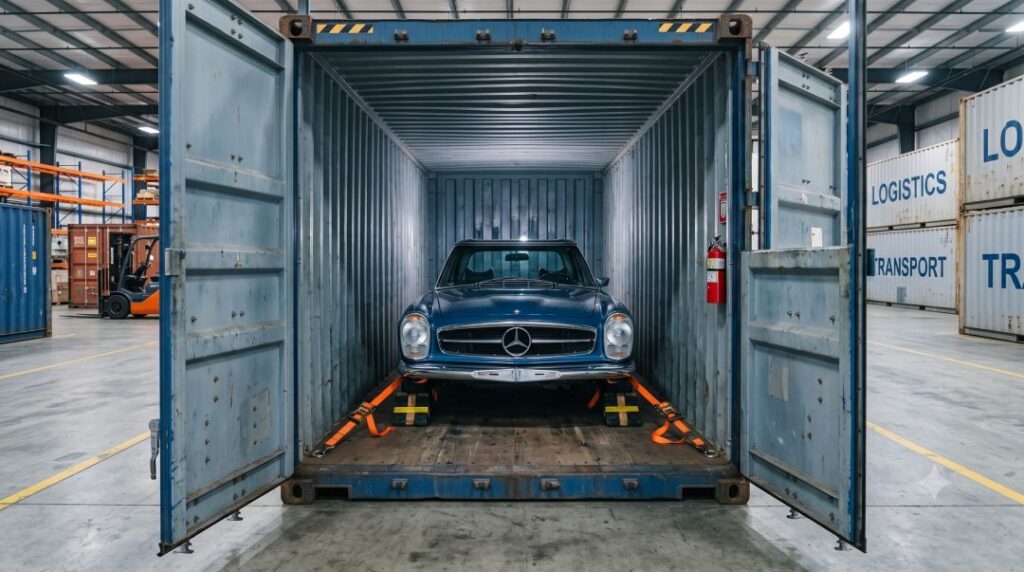
International car shipping costs are driven by a handful of factors: the method (RoRo is cheaper than a dedicated container), the shipping distance to the destination port, vehicle size, and the make and model. As a working range, plan on roughly $1,500 to $3,500 for RoRo to Europe and $2,500 to $5,000 or more for container shipping. Longer routes to Australia, Oceania, or the Middle East push the ocean freight higher.
The ocean freight is only part of the bill. When you compare quotes, look for the extras so you can judge the true landed cost:
- Destination charges: port handling, destination port fees, and local unloading at the arrival port.
- Destination duties and taxes: import duties, import tax or VAT set by the destination country, and sometimes local sales tax and registration fees.
- Fuel surcharges: variable fees that ocean carriers pass along and that move with the market.
- Inland transport: vehicle collection at origin and port-to-door ground transportation at destination if you want door-to-door service.
- Marine insurance: cargo damage protection above the carrier liability that comes standard, which we cover in the choosing-a-company section below.
- Non-running surcharge: an added fee if the car cannot start and roll on its own.
A car shipping calculator can give you a ballpark, but ocean freight is quoted on measurement tons and the real number depends on your exact route. The most reliable figure is a written shipping quote that lists every line item. Transparent, flat-rate pricing with no hidden fees or surprises for international moves is exactly what you should be looking for when you compare.
How long does it take to ship a car overseas?
Ocean transit is the biggest chunk of the timeline, and it varies a lot by destination country. Shipping a vehicle from the U.S. to Europe takes about 2 to 4 weeks, to Asia about 4 to 6 weeks, and to Australia or Oceania about 6 to 8 weeks. Add another 1 to 3 weeks on top for port handling, customs clearance, and final delivery. Season matters too: peak summer and holiday periods can stretch schedules.
| Destination region | Example destination port | Ocean transit | Add for handling and customs |
|---|---|---|---|
| Europe | Rotterdam | About 2 to 4 weeks | 1 to 3 weeks |
| Asia | Major regional ports | About 4 to 6 weeks | 1 to 3 weeks |
| Middle East | Jebel Ali | About 4 to 6 weeks | 1 to 3 weeks |
| Australia and Oceania | Major regional ports | About 6 to 8 weeks | 1 to 3 weeks |
Because of that spread, book early. Most people want the car within a few weeks of their own arrival, so starting vehicle shipping a couple of months before the move keeps everything on schedule. If your dates do not line up, secure storage at origin or destination bridges the gap.
Documents you need to ship a car abroad
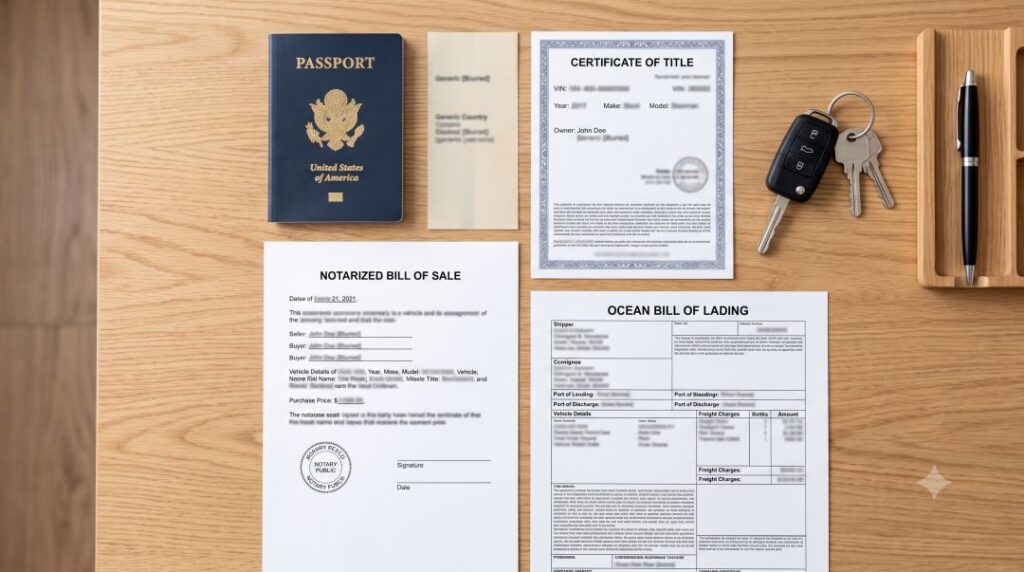
Vehicle export is document-heavy, and U.S. Customs is strict about timing. Your shipping company handles the filing, but you provide the originals. Here is the core import documentation and export paperwork:
- Vehicle title: the original Certificate of Title, or a certified copy, plus two copies. This is the primary proof of ownership.
- Notarized bill of sale: a valid bill of sale, notarized where required, showing the true value of the car.
- Proof of identity: a valid passport for the owner or exporter.
- Vehicle registration: current registration to match the title and the car.
- Bill of Lading: issued by the carrier once the car is booked, it is your receipt and the title document for the cargo.
- Lien letter: if the car is financed, written authorization from the lienholder to export it.
U.S. Customs and Border Protection requires the vehicle and its export documentation to be presented at least 72 hours before the vessel departs, under the export regulations for used self-propelled vehicles. CBP explains the full requirement on its Exporting a Motor Vehicle page. This 72-hour rule applies at every U.S. port, whether you ship from California (Los Angeles, CA and San Francisco, CA), Florida (Miami, FL), or ports such as New York, NY, New Jersey, Houston, TX, and Savannah, GA. Getting export clearance right the first time is what keeps your sailing from slipping.
Import eligibility and import rules differ by destination country. Some places restrict vehicle age or emissions, and most assess duties and taxes on arrival. A destination-side customs broker or import agent handles that clearance. If reading dense shipping contracts makes your eyes glaze over, our guide on the moving contract clauses that actually protect you is worth a look before you sign.
How to prepare your car for overseas shipping
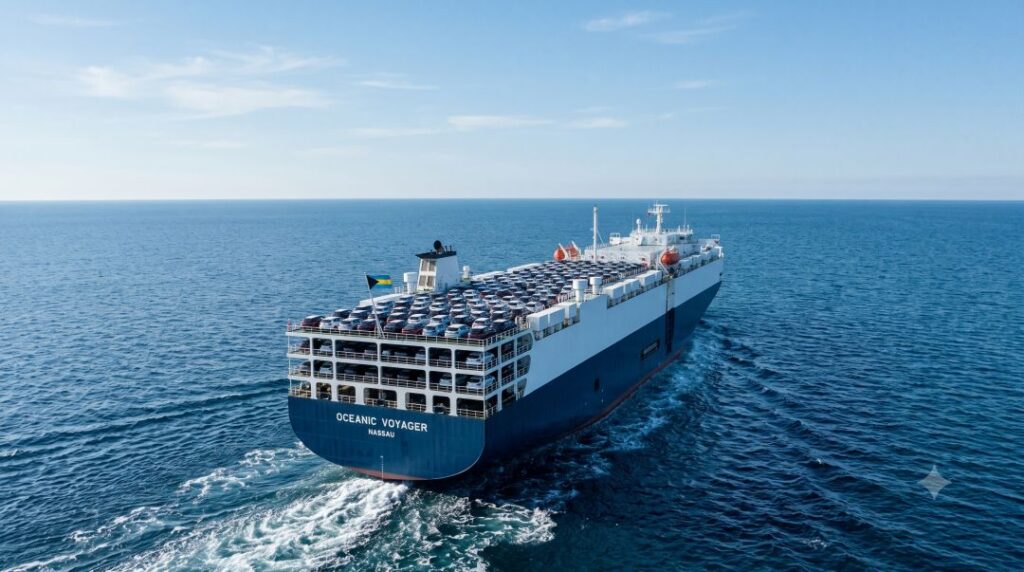
A little prep prevents delays at inspection and disputes on arrival. Before your vehicle collection date:
Clean it, inside and out
Leave the fuel tank under a quarter full
Check for fluid leaks
Handle the battery and alarm
Remove personal belongings for RoRo
Get an inspection report
Shipping electric vehicles, classic cars, and motorcycles
Some vehicles need a specific approach. Electric vehicles ship fine, but the lithium battery brings extra handling rules and some carriers ask for a set state of charge, so container shipping is often the simpler route. Classic cars and other high-value vehicles almost always belong in a dedicated container for the enclosed protection. Motorcycle shipping is common too, usually crated or secured inside a shared container, and it pairs well with vehicle and parts consolidation if you are shipping a bike plus spares.
How to choose a reliable international car shipping company
The overseas car shipping market is crowded. On the auto transport side you will see specialists such as Schumacher Cargo Logistics, Montway Auto Transport, and SGT Auto Transport, while full-service movers and van lines like Allied Van Lines, United Van Lines, Mayflower Transit, International Van Lines, and SIRVA also arrange vehicle shipping as part of a household move. They differ in focus, coverage, and how they price, so compare on the fundamentals rather than the loudest ad.
- Check the FMC license. A legitimate international shipping company is a licensed ocean transportation intermediary. You can verify a company on the Federal Maritime Commission site. Sunset International Shipping is licensed and insured under FMC #023860N.
- Read the insurance terms. Standard carrier liability is limited. For a valuable car, ask about marine insurance and full cargo damage protection, and get the coverage in writing.
- Confirm the service level. Decide between door-to-door, port-to-port, door-to-port, or port-to-door, and make sure inland transport is priced in.
- Look for online tracking. Being able to follow the shipment removes a lot of the anxiety of a multi-week ocean voyage.
- Watch for red flags. No FMC license, no real reviews, a vague quote, or pressure to pay in full up front are all reasons to walk away.
The reason we point clients toward a single dedicated point of contact is simple: a car crossing an ocean touches a dozen hand-offs, and one person who owns the file catches problems before they become expensive. That is the standard Sunset International Shipping holds itself to:
- Transparent, flat-rate pricing with no hidden fees or surprises for international moves.
- Comprehensive international moving services including air and sea freight, packing, storage, vehicle shipping, and custom crating.
- Personalized service with a dedicated consultant as a single point of contact throughout the move.
- Robust global network of 150+ agents ensuring safe and professional handling worldwide.
- 30 days of free secure, climate-controlled storage to ease the moving process.
If you are shipping the car as part of a larger relocation, the same international moving company can coordinate the whole move. Retirees in particular tend to ship a vehicle alongside a full household, and our guide to moving abroad for retirement covers how the pieces fit together.
Frequently asked questions
- How to ship a car overseas?
- Book an international auto transport service, choose RoRo or container shipping, prepare the car and its documents, clear U.S. export requirements at least 72 hours before sailing, then collect the vehicle after customs clearance at the destination port. A full-service shipping company handles vehicle collection, the Bill of Lading, export clearance, and delivery for you.
- What is the difference between RoRo and container car shipping?
- RoRo is usually cheaper and faster for a standard running vehicle, but only the car ships and no personal belongings are allowed. Container shipping costs more and protects the vehicle inside an enclosed container, allows some personal items, and is required for non-running, classic, or high-value vehicles.
- How much does it cost to ship a car overseas?
- Plan on roughly $1,500 to $3,500 for RoRo to Europe and $2,500 to $5,000 or more for container shipping. Destination charges, import duties, VAT, fuel surcharges, and inland transport are added on top. The destination country and vehicle size move the number most, so get a written shipping quote.
- How long does international car shipping take?
- Ocean transit is about 2 to 4 weeks to Europe, 4 to 6 weeks to Asia and the Middle East, and 6 to 8 weeks to Australia or Oceania. Add 1 to 3 weeks for port handling, customs clearance, and final delivery.
- Can I ship personal belongings inside my car?
- With container shipping, yes, subject to the rules in your quote, which is why many relocations use a container. With RoRo, no. Only the vehicle and permanently mounted items ship, so loose items must be removed.
- What documents do I need to ship a car abroad?
- You need the original vehicle title or a certified copy plus copies, a notarized bill of sale, proof of ownership, proof of identity such as a passport, and current vehicle registration. If the car is financed, add a lien letter. U.S. Customs requires the documents and vehicle at least 72 hours before departure.
- Can I ship an electric vehicle or a classic car overseas?
- Yes. Electric vehicles ship with extra battery-handling rules and often go by container. Classic cars and high-value vehicles are best shipped in a dedicated container for enclosed protection. Motorcycle shipping is also common, usually crated or in a shared container.