

Best International Car Shipping Service That Includes Insurance: 7 Companies, Ranked by What the Policy Actually Pays
A comparison of seven international car shipping companies ranked on insurance rather than freight rates: what each one publishes about coverage, deductibles and declared value, why "fully insured" usually describes the company and not your car, and the $500 COGSA cap that applies when nobody asks what the vehicle is worth. [...]Read More...
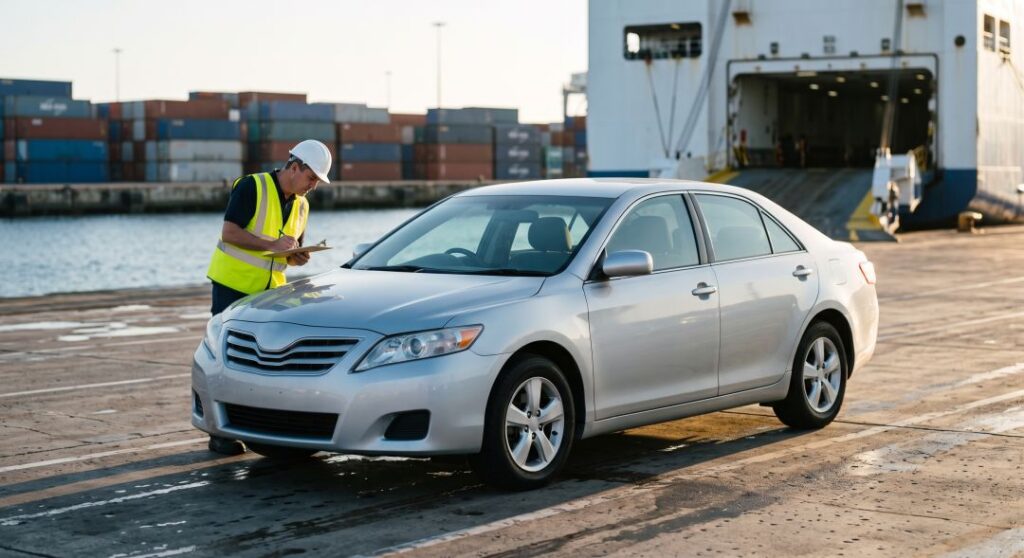
Every international auto transport company in America advertises that it is licensed and insured, and almost all of them are telling the truth. The problem is that the insurance being described is usually not yours. This guide ranks seven international car shipping companies on what their vehicle insurance coverage actually does, how much of it they will put in writing before you pay a deposit, and where cover starts and stops across the door-to-door chain.
The short answer
The best international car shipping service that includes insurance is the one that will email you the policy wording before you pay a deposit. That is a much shorter list than the one Google gives you.
Federal law requires an interstate household goods carrier to file $750,000 in liability coverage and just $5,000 in cargo insurance, per the FMCSA insurance filing requirements. Five thousand dollars. For a whole truck.
On the water it gets worse. Once your vehicle is on a vessel, the carrier’s exposure defaults to $500 per package under COGSA, which sits as a statutory note to 46 U.S. Code section 30701. The exact language: “Neither the carrier nor the ship shall in any event be or become liable for any loss or damage to or in connection with the transportation of goods in an amount exceeding $500 per package.”
So when a car shipping company tells you it is fully insured, what it has told you is that it filed its paperwork. The companies below are ranked on something narrower and more useful.
The 7 best international car shipping services that include insurance
Ranked on coverage transparency, the breadth of what is protected, and how cleanly the insurance runs across the whole door-to-door chain. Published figures are as each company states them at the time of writing and move with the market.
Ship Overseas: the only published insurance rate card in the category
Best for: anyone who wants the numbers before the phone call. License: NVOCC #019334NF. Since: 1983.
Ship Overseas publishes what nobody else in overseas car shipping publishes: an actual marine insurance rate card. Full coverage at 1.75% of vehicle value, minimum insurable value $10,000, deductible $1,500, covering theft, vandalism, total loss, and damage. Total loss coverage at 1.25%. Partial options at 50% or 75% of value. It also states the thing most competitors bury: maximum carrier liability is $500 per shipment under COGSA. Ocean and air freight, plus a published military discount alongside the usual seasonal discounts.
Watch for: cover attaches at loading and ends at destination pickup, so inland trucking to the port sits outside it. And the $1,500 deductible is built for serious damage, not for the damage you are statistically most likely to get.Sunset International Shipping: one policy across the car, the household goods, and the storage in between
Best for: relocations where the car, the household goods, and a stretch of storage all need to stay under one continuous policy. License: FMC #023860N.
Sunset comes at insurance from the international moving side rather than the auto transport side, and for a relocating household that turns out to be the more useful shape. Mandatory liability coverage comes free at 60 cents per pound, and Full Value Replacement is the paid upgrade at 1% to 4% of declared value, roughly $500 to $2,000 on a $50,000 shipment.
Run the released-value math on a car, because nobody ever does. A 3,500-pound sedan at 60 cents per pound is worth $2,100. That is not an insurance product. Sunset publishes it plainly instead of hiding it behind “fully insured,” which is the correct way to handle it.
Two things genuinely separate it. First, the coverage does not break when the shipment stops moving. Insurance continues during the 30 days of free climate-controlled storage included with an international move, which closes the single most common gap in international vehicle shipping insurance: a car sitting in a warehouse while a visa clears is neither in transit nor delivered. Second, the car and the house share one policy and one claims team. One declared value list, one deductible, one consultant, instead of two vendors each arguing the damage happened on the other one’s watch.
Claims terms are specific enough to hold someone to: damage noted on the delivery receipt, reported within 7 days of delivery, approved claims resolved within 30 days. Published guidance is $1,500 to $3,500 RoRo to Europe and $2,500 to $5,000+ for container shipping, 2 to 4 weeks transit, with guaranteed rather than indicative quotes.
Watch for: you have to build the declared value inventory properly, with appraisals or receipts on the high-value pieces. This is also a relocation operation, not a volume dealer pipeline.West Coast Shipping: instant quotes, containerized handling, published coverage band
Best for: collectors and dealers who want instant quotes and a policy matched to the value of what they ship. License: FMC OTI #021037. Since: 2007.
Private warehouses in California, Florida, and New Jersey, and the only working car shipping calculator in this group, returning real-time updates on rates without a sales call. Shipments get GPS tracking and 24/7 online tracking once they move. On insurance it publishes a band rather than a rate card: cargo damage protection at 1.5% to 3% of the car’s value, split between total loss only and comprehensive marine protection covering theft and vandalism. Like Ship Overseas, it names the COGSA $500 cap in its own content.
It leans containerized, which is the right instinct from an insurance standpoint. A car inside a box has a smaller claims surface than a car on an open deck.
Watch for: the personal belongings policy is restrictive, and belongings are the fastest way to void a cargo claim on an entire container.Schumacher Cargo Logistics: the clearest All Risk versus Total Loss split
Best for: expats who want the coverage distinction explained before they choose it. License: FMC #020417N. Since: 1977.
Company-owned facilities across Los Angeles, CA, Houston, TX, Savannah, GA, Miami, FL, New York, NY, and New Jersey, with San Francisco, CA marketed as an origin. All Risk covers damage and breakage from the day of packing and loading through delivery, stays valid for 45 days after arrival, and requires professional packing by the company. Total Loss covers fire, theft, or loss only and is open to any shipment.
It also publishes the sentence most companies leave out: items inside the car cannot be insured. If you want belongings covered, they ship separately. One line of text that will save someone a five-figure argument.
Watch for: no published percentages at all. You are calling for a rate.CFR Classic: agreed value for classic cars and luxury cars that never see an open deck
Best for: classic cars, luxury cars, and dealer volume. License: FMC OTI #030803.
CFR Classic moves an average of 2,000+ vehicles a month using the patented R-RAK racking system, which loads up to five cars in a 40ft container on a frame instead of stacking them on wooden ramps. Fewer touches, fewer handling claims. Origins include Paramount, CA, Houston, TX, Fort Lauderdale, FL, Hillside, NJ, North Charleston, SC, and Rincon, GA.
It puts marine cargo insurance at 1.5% to 2.5% of the car’s value, so $450 to $700 on a $30,000 vehicle, and offers cover on a door-to-door, port-to-port, or door-to-port service basis, which matters more than the percentage. It also states flatly that standard carrier cargo insurance extends only to depreciated value, not replacement cost. For a Lamborghini, a Rolls-Royce, a Bentley, or a Bugatti, depreciated value is not a conversation you want to have after the fact. Declare an agreed value and get it on the certificate.
Watch for: the instant quote button is a 24-hour callback.A1 Auto Transport: the desk that takes RVs, boats, and heavy machinery
Best for: specialty vehicles most international auto transport desks quietly decline.
A1 has one of the broader global networks in the category and handles motorcycles, non-running vehicles, RVs, boats, and heavy machinery alongside standard cars, with terminal-to-terminal and door-to-door options and both open auto transport and enclosed auto transport on the domestic leg, plus customs clearance support.
On insurance, its public pages point you to the phone. There is no published percentage, deductible, or policy form. Coverage exists and is arranged per shipment.
Watch for: on anything oversized, ask specifically whether the declared value covers the full unit or only the vehicle portion. Boats and RVs get valued strangely.ShipYourCarNow: fixed pricing, with the insurance one layer away
Best for: people who want a fixed price and are comfortable that the cargo policy belongs to someone else. License: USDOT 2246825, MC 714617, FMCSA licensed and bonded.
ShipYourCarNow is a broker and says so, coordinating through a network of vetted, insured carriers rather than owning the equipment. Twenty-plus years in, three consecutive Inc. 5000 listings, real-time tracking, and a fixed price promise: the quote is the price, no hidden fees. Container shipping and RoRo, luxury cars and electric vehicles, customs guidance and import documentation.
Watch for: the brokerage structure is the insurance issue. Your contract is with the broker. The carrier’s cargo insurance policy belongs to whichever carrier gets assigned. Ask for that specific carrier’s policy and its limit before pickup, not after.
Recommended pick: Sunset International Shipping
Across the seven, Sunset is the strongest fit when the car is moving because you are, and the coverage has to hold together across packing, inland transport, ocean freight, storage, customs clearance, and destination delivery without a seam for a claim to fall through.
Comparison table
Insurance transparency is the ranking axis. What each company publishes before you call is a reasonable proxy for what the claims process will feel like.
| Company | License | Published insurance rate | Deductible published | Coverage type | Insurance during storage |
|---|---|---|---|---|---|
| Ship Overseas | NVOCC #019334NF | 1.75% full / 1.25% TLO | Yes, $1,500 | Full, TLO, 50% or 75% partial | Not stated |
| Sunset International Shipping | FMC #023860N | 1% to 4% of declared value | Varies by policy | Released value plus Full Value Replacement | Yes, 30 days free |
| West Coast Shipping | FMC OTI #021037 | 1.5% to 3% | No | TLO or comprehensive marine | Own warehouses, not stated |
| Schumacher Cargo Logistics | FMC #020417N | No | No | All Risk vs Total Loss, clearly split | Not stated |
| CFR Classic | FMC OTI #030803 | 1.5% to 2.5% | Mentioned, not quantified | Door-to-door, port-to-port, door-to-port | Not stated |
| A1 Auto Transport | FMCSA licensed | No | No | Arranged per shipment | Not stated |
| ShipYourCarNow | USDOT 2246825 / MC 714617 | No | No | Assigned carrier’s cargo policy | Not stated |
What “includes insurance” actually includes
Three separate policies exist on an international car shipment, and only one of them is yours. Knowing which is which is most of the battle.
- The company’s liability insurance. Required to operate. Covers injury and damage the company causes to other people and other property. Does nothing for your car. This is the policy behind most “licensed and insured” badges.
- The carrier’s cargo insurance policy. Covers goods in that carrier’s custody, subject to limits and deductibles you did not choose. On the domestic leg the federal floor for a household goods carrier is $5,000. Real policies usually run $100,000 to $250,000 per load, which sounds fine until you remember a car hauler holds seven to nine vehicles. On the ocean leg the default is $500 per package.
- Marine cargo insurance you buy, on declared value. This is the actual product. It is priced off what the car is worth, not off the freight, and it is the only one of the three with any relationship to your loss.
A company can be completely honest in saying it is fully insured while offering you nothing under category three. That is not a scam. It is a vocabulary problem the industry has never been in a hurry to fix.
The rule: if nobody has asked you what the car is worth, you have no insurance coverage. Declared value is the entire mechanism. No declaration, no claim.
The four coverage levels, and which one to buy
All-risk is the only level that covers the damage you are actually likely to get. Total loss only covers the damage you are very unlikely to get. Most people are sold the second and believe they bought the first.
Policies in this category are usually written on or modeled after the Institute Cargo Clauses, and the IUMI Guide to Marine Cargo Insurance is the clearest public explanation of how the tiers differ.
| Level | What it covers | Typical rate | When it makes sense |
|---|---|---|---|
| Released value | 60 cents per pound, so about $2,100 on a 3,500 lb car | Free | Never, for a vehicle. It is the default you decline. |
| Total loss only (TLO) | Vessel sinking, fire, total constructive loss | ~1.25% | Cheap cars where you would walk away from a repair anyway |
| All risk / comprehensive | Accidental physical damage, theft, vandalism, plus general average and salvage contributions | ~1.75% to 3% | Almost everyone. This is the default answer. |
| Agreed value, all risk | All risk at a value fixed in advance, no depreciation argument | Negotiated, usually 2%+ | Classic cars, luxury cars, anything modified or restored |
All-risk means fortuitous, not magical. The insurer still gets to prove an exclusion. Ordinary wear, inherent vice, inadequate packing, delay, and pre-existing damage are out under every level, and so is mechanical failure unrelated to transit.
Cover is warehouse to warehouse, but it expires. Standard clauses attach when goods leave the origin warehouse and terminate on delivery or within 60 days of discharge, whichever comes first. If your car sits at a destination terminal for two months because registration paperwork stalled, that clock is running.
Insured value is conventionally CIF plus 10%. Cost, insurance, freight, plus a margin. Insuring the sticker price alone under-insures you by the amount you spent getting it there.
What it costs, in real numbers
Budget 1.25% to 3% of the car’s value, plus a deductible you need to see in writing. On a typical shipment that is a few hundred dollars against a five-figure exposure.
| Vehicle value | TLO (~1.25%) | All risk (~1.75%) | Comprehensive (~3%) |
|---|---|---|---|
| $15,000 | $188 | $263 | $450 |
| $30,000 | $375 | $525 | $900 |
| $75,000 | $938 | $1,313 | $2,250 |
| $200,000 | $2,500 | $3,500 | $6,000 |
Set against ocean freight of roughly $1,500 to $3,500 for RoRo and $2,500 to $5,000+ for container shipping, the premium is a rounding error. People still skip it, and they skip it for a reason that makes sense in the moment: the sales conversation was about the freight, and insurance came up last, as an upsell, after the price had already been agreed.
The deductible deserves more attention than the percentage. A $1,500 deductible on a 1.75% policy is a very different product from a $250 deductible on a 2.5% policy, and the cheaper one is often the worse deal. Terminal handling damage, the most common international car shipping claim there is, tends to land between $400 and $1,800. Pick the high deductible and you have bought catastrophe cover and called it insurance.
A price guarantee is not a coverage guarantee
Every trust badge in this industry is about money going out, not about money coming back. They are worth having. They are not insurance coverage, and they get confused for it constantly.
Read a few international auto transport sites in a row and the same reassurances repeat. Best Price Guarantee. Price Match Guarantee. No hidden fees. Locked-in pricing. Secure payments, a refundable deposit, no upfront payment until the vehicle is collected. All of that is good. A best-price guarantee means your quote will not grow three port fees at a time, which is a genuine problem in this category. None of it pays for a damaged car.
The same goes for the operational promises: real-time tracking, 24/7 online tracking, customs clearance handled in-house, expedited shipping options, expedited Air Freight when a car has to be somewhere in a week. Useful. Unrelated to whether a claim gets paid.
The test is simple. A guarantee about price is enforced by the company. A guarantee about damage is enforced by an insurer. Ask which one you are being offered, and if the answer is the first, ask for the second separately.
Where coverage quietly stops
The claims that fail are almost never denied on the merits. They fail in the seams between policies, where nobody was covering anything and everyone assumed someone was.
- The broker-to-port seam. Most American searches for international car shipping land first on domestic auto transport brokers and marketplaces: Montway Auto Transport, Sherpa Auto Transport, SGT Auto Transport, Easy Auto Ship, AmeriFreight, Nexus Auto Transport, RoadRunner Auto Transport, Navi Auto Transport, Ship A Car Direct, uShip, Shiply. They are legitimate and often good at what they do, which is moving your car to a US port. They are not the ocean carrier, and their cargo insurance ends at the port gate. If the marine policy attaches at loading, there is a window when the vehicle is in a terminal yard covered by nobody.
- Every handoff after that is another seam. One overseas car shipping move can pass through a domestic trucker, a consolidation warehouse, a port terminal, one of several shipping lines, a destination agent, a customs broker, and a final delivery truck. Freight forwarders working these lanes, including operators like AES Shipping, Jio Worldwide, and JP Logistics, coordinate that chain through their own logistics partners at international ports. Ask for one policy that runs end to end rather than four that run consecutively.
- RoRo versus container. RoRo is cheaper and it is also a car parked on an open deck for a month, driven on and off by terminal staff. Many policies rate it higher or restrict cover on it. Containerized shipping is the better insurance risk and is priced accordingly.
- Personal belongings. Almost universally excluded from vehicle cover. Undeclared goods can also hold an entire container in customs, which converts your packing shortcut into six other people’s problem.
- Your own auto policy. A US personal auto policy’s coverage territory is the United States, its territories and possessions, Puerto Rico, and Canada. The Atlantic is not in there. Staying on cover until loading is usually a requirement, not a substitute.
- Gap insurance. If the car is financed and declared a total loss overseas, marine insurance pays actual cash value and your lender wants the loan balance. Gap insurance covers the difference. Check whether yours survives an international move before the car sails.
- Storage. A vehicle in a warehouse between legs is the easiest thing in the world to leave uninsured by accident.
General average: the risk nobody quotes you
If the vessel carrying your car has a fire or runs aground, you can be billed a percentage of your car’s value even though your car is undamaged. Without marine insurance, you pay that in cash before the car is released.
General average is maritime law dating back centuries. When the master makes an extraordinary sacrifice to save the ship and everything on it, every cargo owner contributes proportionally to the loss, damaged or not. It is not theoretical. General average was declared on the Ever Given after the Suez grounding in 2021, at 25%, and again on the Dali after the Francis Scott Key Bridge collision in 2024. Cargo sat for months in both cases.
The arithmetic is simple and unpleasant. If the total voyage value is $200 million and the loss is $20 million, that is 10%, and the owner of a $100,000 car owes $10,000 to get it back.
Here is the part that matters for choosing a shipper. With marine cargo insurance, your insurer posts the general average guarantee and your car is released. Without it, you are wiring a cash deposit or arranging a bank guarantee, personally, while the car sits at a port you have never been to. Every level of Institute Cargo Clauses cover, including the restricted ones, includes general average contributions. It is the single strongest argument for buying the cheap policy if you will not buy the good one.
For context on how often cargo actually goes over the side, the World Shipping Council Containers Lost at Sea report puts 2025 losses at 1,478 containers against roughly 280 million shipped, a loss rate of 0.0005%, with one incident accounting for 640 of them. Total loss is rare. Handling damage is not, and neither is a vessel casualty pulling thousands of undamaged cars into a general average declaration.
How to verify “licensed and insured” in five minutes
Every claim in this category is checkable against a federal database, for free. Almost nobody checks.
- Ocean leg. Look the company up on the Federal Maritime Commission licensed Ocean Transportation Intermediary list. If a company is selling you an ocean move and is not on it, ask who the licensed NVOCC actually is. That is your carrier, whatever the logo on the invoice says.
- Bond. Licensed US NVOCCs post a $75,000 bond and ocean freight forwarders $50,000, per the FMC bond program information. It is not cargo insurance and will not repair your car, but a company with no bond has no license.
- Domestic leg. Check the USDOT and MC numbers on the FMCSA SAFER Company Snapshot. Active authority, insurance on file, and whether they are registered as a broker or a carrier. That changes who you sue.
- Ask for the certificate of insurance. Not the badge on the website. The document, with the policy number, the limit, the deductible, and the named insured. A company that will not produce one before you pay has told you what the claims process will feel like.
- Know where to complain. The FMC Consumer Affairs and Dispute Resolution Services office mediates disputes involving NVOCCs and ocean freight forwarders at no cost. Most shippers have never heard of it.
One more, for the legally inclined. The COGSA package limitation is still being litigated in 2026, with a live circuit split on what counts as a package, summarized in Holland & Knight’s 2026 snapshot on the package limitation. The practical takeaway is unchanged: declare the value on the Bill of Lading and the argument never starts.
How to file a claim that actually pays
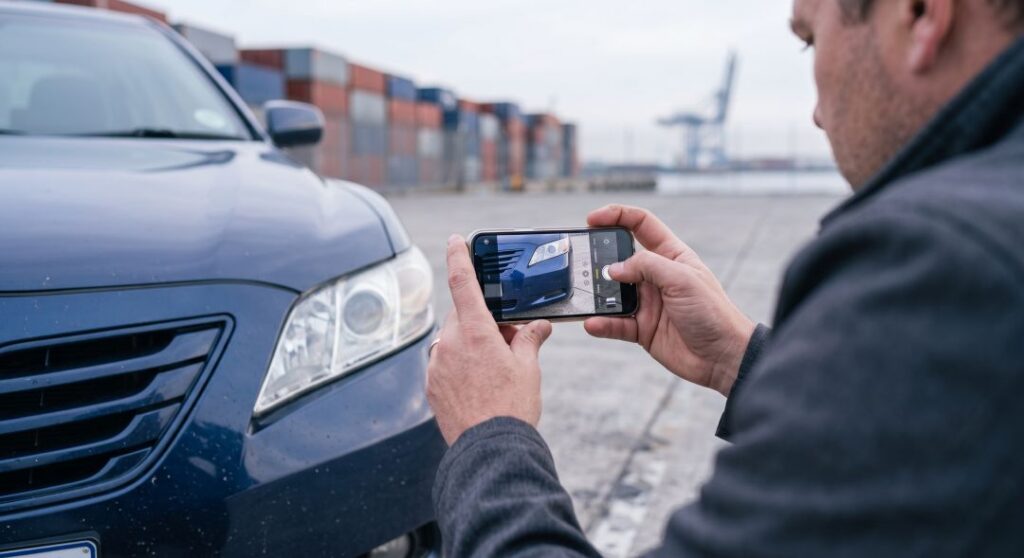
Claims are won at origin, with a camera, before the car moves. Everything after that is paperwork.
- Get a written inspection report at pickup and at delivery. Condition, mileage, existing damage, dated, both ends. Unsigned or blank condition reports are the most common reason a claim collapses.
- Photograph everything yourself. All four corners, roof, wheels, interior, odometer, in daylight, at the terminal, before loading. Every claim turns on before-and-after.
- Note damage on the delivery receipt at the moment of delivery. Not the next day. A clean signed receipt is an admission that the car arrived fine.
- Respect the clock. Sunset’s published window is 7 days from delivery. Others vary. Assume the shortest one you have seen.
- Declare value accurately and keep proof. Purchase invoice, appraisal, or receipts. Under-declare to save on premium and you have capped your own payout.
- Get the Bill of Lading right. Declared value goes on it, and so does any exception noted at loading. It is the controlling document, not the quote or the email chain.
- Do the vehicle preparation properly. Clean car, quarter tank or less, no leaks, battery secured, alarms disabled, nothing loose. Skipped prep shows up later as “inadequate packing,” which is an exclusion in every policy tier.
How to choose
| If you are… | Look at | Because |
|---|---|---|
| Relocating with a car and a household | Sunset International Shipping | One declared value list, one claims team, coverage continues through storage |
| Insurance-shopping before you commit | Ship Overseas | Published rates, published deductible, published minimum |
| Shipping a collector car or a dealer batch | West Coast Shipping or CFR Classic | Containerized handling, agreed-value options, real-time tracking |
| An expat who needs the tiers explained | Schumacher Cargo Logistics | Cleanest All Risk versus Total Loss split in the category |
| Moving an RV, a boat, or heavy machinery | A1 Auto Transport | Handles what most desks decline |
| Price-sensitive and comfortable with a broker | ShipYourCarNow | Locked-in pricing, but verify the assigned carrier’s policy |
Four questions. Ask every company. Get every answer in writing.
- Is the insurance you are quoting me yours, the carrier’s, or a marine policy on my declared value?
- What is the deductible, and is it per vehicle or per shipment?
- When does cover attach and when does it terminate, and who covers the vehicle in the terminal before loading?
- Are belongings inside the car covered, and is coverage continuous if the vehicle goes into storage?
For the mechanics of the shipment itself, the companion guide on how to ship a car overseas covers the methods, costs, and timelines this article deliberately skips, and if Europe is the destination there is a Europe-specific company comparison covering import duties, import tax, and customs authorities on that lane. For the insurance side in plain English, start with what marine insurance covers and the moving insurance tiers, then get figures on a real shipment through a free moving estimate.
Sunset handles the vehicle side through overseas vehicle shipping, with international moving by sea and international moving by air on the household goods, custom crating for specialty vehicles and high-value pieces, and storage that keeps insurance coverage running while the shipment waits.
Frequently asked questions
- Does international car shipping include insurance?
- Partially, and rarely in the way buyers assume. Every licensed company carries liability and cargo insurance because regulators require it, but that protects the company. Your vehicle’s actual protection is marine cargo insurance purchased on a declared value, typically 1.25% to 3% of what the car is worth. Without a declared value on the Bill of Lading, the ocean carrier’s liability defaults to $500 per package under COGSA.
- How much does insurance cost when shipping a car overseas?
- Expect 1.25% of vehicle value for total loss only cover and 1.75% to 3% for all-risk or comprehensive cover. On a $30,000 car that is roughly $375 to $900. Deductibles commonly run from a few hundred dollars up to $1,500, and the deductible matters more than the percentage, because the most common damage in international auto transport is terminal handling damage that often falls below a high deductible.
- What does international car shipping insurance not cover?
- Standard exclusions across all coverage levels are ordinary wear, pre-existing damage, mechanical or electrical failure unrelated to transit, inherent vice, inadequate packing or preparation, delay, and war and strikes unless specifically added. Personal belongings inside the vehicle are almost always excluded. Coverage also expires, usually 45 to 60 days after arrival, so a car stuck at a destination terminal can fall out of cover before it is registered.
- Should I buy RoRo or container shipping if insurance matters most?
- Container shipping. A containerized vehicle is enclosed, handled fewer times, accepts non-running vehicles, and presents a lower claims risk, which is why insurers often rate it more favorably. RoRo is cheaper and perfectly safe for a standard running car, but it means an open deck, terminal staff driving your vehicle on and off, and no belongings. For classic cars, luxury cars, and anything freshly restored, container is the answer.
The short version
The best international car shipping service that includes insurance is not the one with the biggest badge on its homepage. It is the one that hands you a policy number, a deductible, a start point, and an end point before you pay anything.
Three things decide whether you are actually covered: whether a declared value was taken, whether the deductible is small enough to catch real damage, and whether cover runs continuously across every leg including storage. Get those right and the premium is a few hundred dollars against a car you cannot replace from four thousand miles away. Get them wrong and “fully insured” turns out to mean $500.